
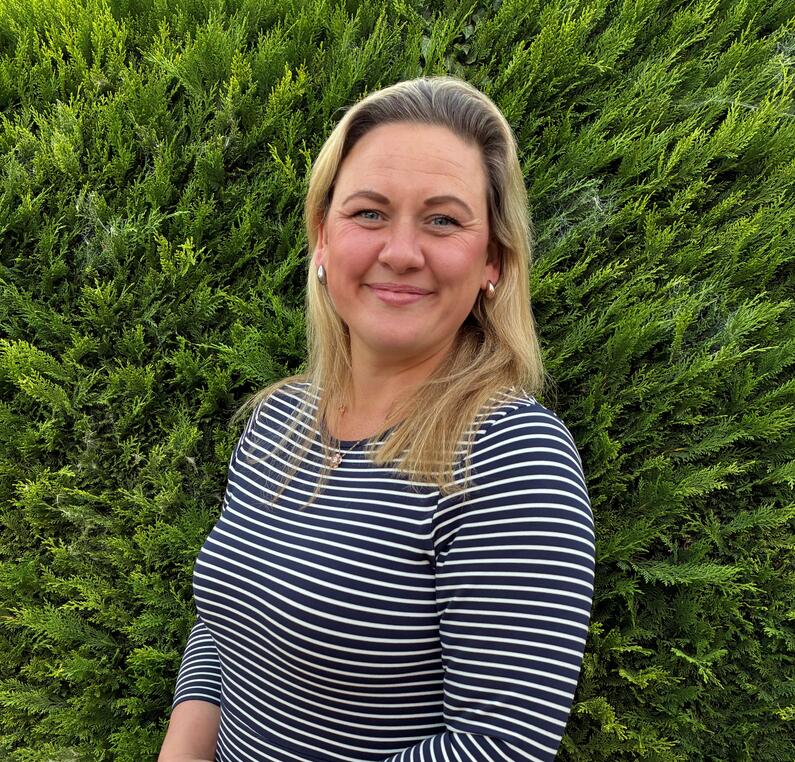
Nicola Bowers
My journey into agriculture has been anything but conventional. Growing up in East Sussex with no ties to farming, I never imagined I would find such a deep passion in the world of pigs. Yet, through a winding career path, I have found my place in a niche but rewarding sector within agriculture.
Starting with an academic background in Chemistry, I later pursued a Master's in Applied Animal Behaviour and Welfare, where I was first introduced to pigs in 2011. A research role in a retailer-funded project, working with commercial farms to investigate loose farrowing systems and the traits that make a sow suitable for them, launched me into the sector with a bang. That experience sparked a lasting interest in pig welfare and production systems.
Following this, I joined a specialist pig veterinary practice in East Yorkshire as a Veterinary Technician. Nearly a decade later, I now travel extensively across the UK, dividing my time between training, consultancy, and hands-on work on farms. I believe that every farm is unique, and unlocking its potential requires tailored approaches, grounded in science and delivered with empathy. I’m committed to working alongside farmers and their teams, applying knowledge in a way that respects individual systems while striving for continual improvement.
The pig industry has weathered countless challenges, yet it continues to adapt and evolve. Through my Nuffield Scholarship, I hope to contribute to that evolution—helping ease the transition into the future and ensuring the resilience and sustainability of the sector I’ve come to love.
Flexible farrowing and the hyper-prolific sow; is it possible to have it all?
Yorkshire Agricultural Society

AHDB

Study Overview
My study aims to investigate whether two significant developments in pig production—hyper-prolific sows and flexible farrowing systems—can truly coexist in practice.
Managing large litters (defined as more than 16 piglets born alive) within systems designed to prioritise animal welfare presents practical, economic, and ethical challenges. Flexible farrowing systems offer a compromise between permanent confinement and fully free farrowing. These systems allow for temporary confinement during the piglets’ most vulnerable period (from birth to day 4), while enabling nesting behaviour before farrowing and increased sow movement during lactation.
Despite their potential welfare benefits, adoption of flexible farrowing systems in the UK has been slow. Barriers include concerns over increased piglet mortality, the need for skilled labour, and financial constraints around adapting existing infrastructure.
At the same time, the drive towards hyper-prolific sows is accelerating, driven by economic pressures such as volatile pork prices, rising input costs, and the need to produce affordable protein for consumers. Increasing pigs per sow is often seen as a route to improved efficiency and sustainability—particularly important in the UK, which currently produces less than half the pork it consumes.
I am incredibly grateful for the sponsorship from AHDB and Yorkshire Agricultural Society to allow me to explore how countries that utilise similar hyper-prolific genetics are able to successfully rear high numbers of piglets, and whether the strategies they use to support piglet survival can be adapted to flexible farrowing systems. The findings will provide valuable insights into how the UK pig sector can evolve over the next two decades—balancing productivity with welfare and supporting farms through an increasingly complex future.