

Report Synopsis
Slamming Doors Open: Pathways into Agriculture through Education, Youth Groups and Consumer Engagement
Agriculture is more than a career, it is a culture, a community and a critical component of sustainable Society. Yet in the UK and beyond, pathways into the sector remain uneven, often reliant on pre-existing networks, rural upbringing or sheer luck. This report explores how we can open those doors more widely - starting in schools, supported by youth organisations, strengthened through further and higher education and sustained by consumer engagement.
Based on a study tour of 26 weeks that spanned ten countries and six continents, this report investigates how different nations approach agricultural education and rural engagement. From the integrated agribusiness curriculum in New Zealand’s schools to Tanzania’s values-based 4H youth programme and the vast embedded Future Farmers of America (FFA) movement in the United States (US), international examples offer valuable inspiration. Each country visited, from Switzerland’s dual-track vocational model to Japan’s advanced agri-tech research, provides unique insights into how learning, leadership and consumer trust can be nurtured across diverse systems.
The research focuses on four key pillars:
- Primary and Secondary Education: Schools represent the first opportunity to connect children to food systems and rural life. While organisations such as the Royal Highland Educational Trust (RHET) and Linking Environment and Farming (LEAF) Education do incredible work, their reach is limited. Integrating agriculture into national curricula from an early age through science, literacy or geography could embed lifelong understanding and appreciation
- Youth Organisations: Groups like the Scottish Association of Young Farmers Clubs (SAYFC), Yorkshire Agricultural Society (YAS), and 4-H offer life-changing personal development, leadership training and a social route into the sector. Their ability to engage individuals regardless of academic strength, social background or rural connection makes them powerful tools for inclusion and inspiration
- Further and Higher Education: The UK’s land-based colleges and universities are already innovating. The NextGen model at SRUC Barony, with its emphasis on portfolio-based assessment and hands-on learning, offers a template for modern agricultural education. However, sector-wide change will require consistent investment, industry alignment and the celebration of vocational pathways as equal in value to academic ones
- Consumer Engagement: Public understanding of farming remains patchy. But from Clarkson’s Farm to TikTok, agriculture is regaining public visibility. The sector must seize this momentum, engaging the public through schools, social media and accessible storytelling, not just to educate but to connect.
This report does not advocate for one silver bullet solution. Rather, it offers a holistic model where exposure to agriculture begins early, grows through youth and academic experiences and continues into adulthood, as both a career and consumer choice. By combining global insight, practical recommendations and lived experience, it aims to inform future policy and practice, so that entering agriculture is no longer a closed door, but one that is open, supported and slamming shut behind you only to stop the wind.
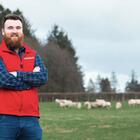
Wallace Currie
The MacRobert Trust