
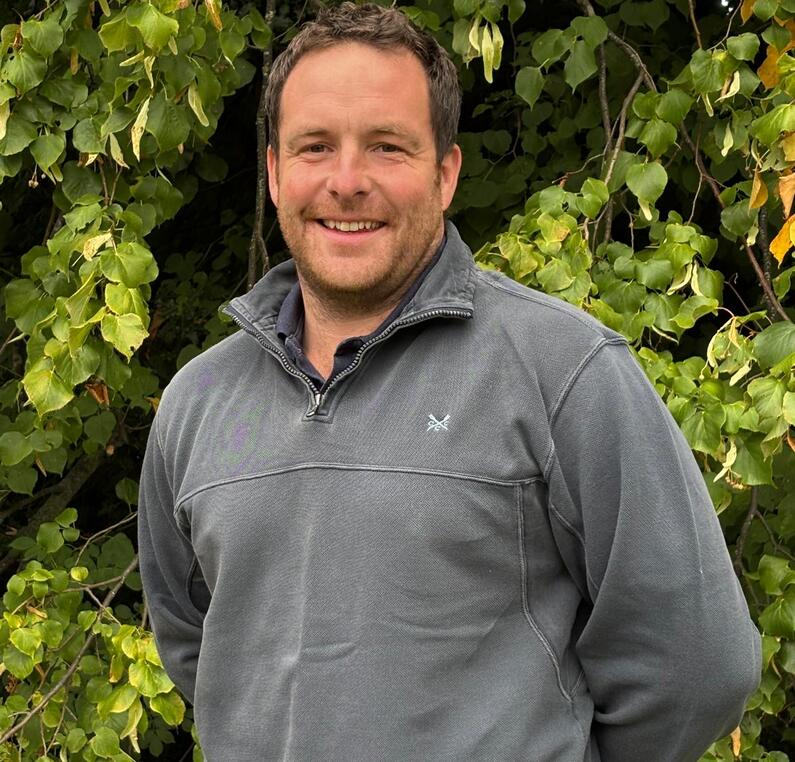
Toby Tibbenham
I was brought up on a multi-generational family farm situated on the Norfolk-Suffolk border. This upbringing instilled in me a strong connection to agriculture and rural life. After school I went on to study Agricultural Business Management at the University of Reading, furthering my knowledge and expertise in the field.
Throughout my career, I have been an active member of several discussion groups, embracing farmer-to-farmer learning. These experiences have enabled me to share insights, exchange ideas, and develop practical solutions with peers in the industry.
My wife, Evie, and our three children enjoy spending time on the farm together or at the nearby Suffolk coast. Whether it be with our dogs, developing our Beef Shorthorn herd, chasing sheep or satisfying a young boys tractor obsession we hope to create lasting memories and develop the next generations passion for the countryside.
Relaxation comes in the form of good food; I am passionate about barbeque and cooking with fire pits. Top quality ingredients smoked and cooked over natural woodfire paired with a glass of wine is how I like to spend an evening.
Family farms cooperation, integration, diversification can it work?
The Royal Norfolk Agricultural Association
Study Overview
Having played team sport my whole life I have often questioned why farm businesses have tended to work individually. There is particularly emphasis on this when looking at the duplication of processes across arable units; I believe there is huge potential for increasing profitability of the parent businesses within a joint venture. So, the question comes why don't we collaborate more?
There are many aspects to get right to enable multiple family farms to work together. The attitude and mindset of the people involved will likely play one of the biggest roles in the outcome of any collaborative approach. I hope to do a lot of learning on psychology, personalities and human behaviour to be able to understand the process of identifying the right people to work with and how to utilise everybody's strengths to maximise outcome.
The second stage is to explore what can be achieved on the back of a successful collaboration. What opportunities can the joint venture release such as capital, knowledge, physical assets. Perhaps most exciting is the freeing up of entrepreneurial time to enable diversification or off farm investment.