
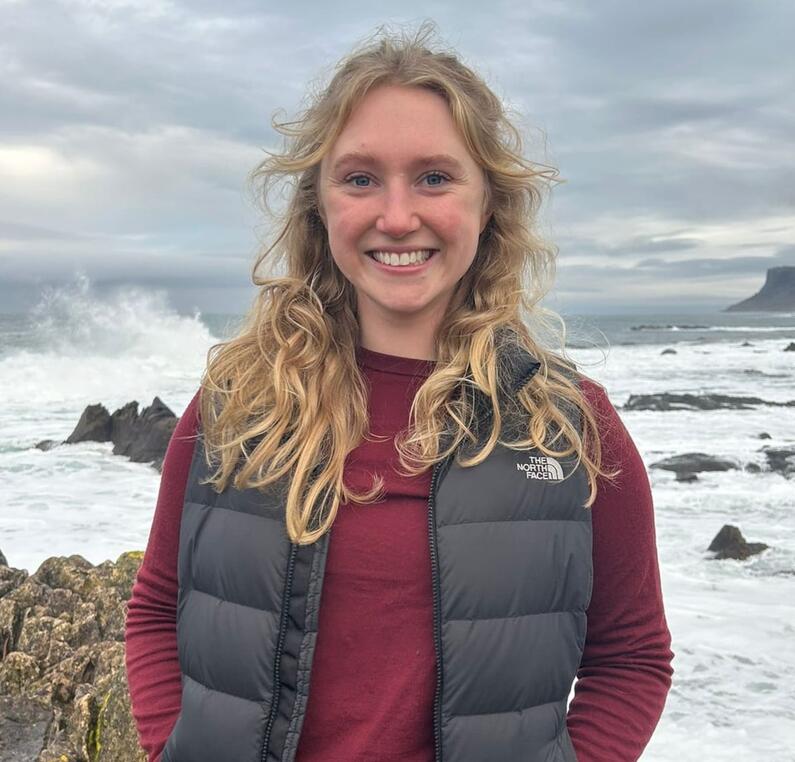
Jenny Black
I’m a regenerative aquaculture specialist, with experience in the finfish, seaweed and coastal restoration sectors. In my current role, I run the Seaweed Academy at the Scottish Association for Marine Science. The Seaweed Academy is the UK’s only dedicated seaweed industry training facility. Through this, I’ve had the privilege of teaching a wide variety of people interested in the seaweed aquaculture sector, including prospective and current seaweed farmers, those in aquaculture and agriculture wanting to diversify, regulators, and people in education.
Growing up in Ireland, I’ve always loved the sea and now I have the pleasure of working with it as well as enjoying it in my free time. My ultimate goal is to see a healthy, culturally rich food production system from our seas that benefits both our ocean ecosystems and the coastal communities that interact with them. I hope to build on my previous experiences and the insights that I will gain from the Nuffield Scholarship to help play a part in restoring our oceans.
Thank you to the Richard Lawes Foundation for their support and sponsorship of my Nuffield journey.
Are cooperatives the key to creating a successful UK seaweed aquaculture industry?
The Richard Lawes Foundation
Study Overview
Seaweed farming has deep cultural roots in the UK and Ireland, especially in coastal Scotland and Ireland, where it was traditionally used for food, fertiliser, and animal feed, and later for industrial purposes like potash extraction. Now, in the 21st century, seaweed is regaining attention as a sustainable, low-impact industry with potential global markets in biostimulants, alternative proteins, sustainable packaging, nutraceuticals, and cosmetics. Seaweed is an incredible resource that not only has the potential to assist in food security and improve coastal economies, but also to actively assist in achieving climate resilience.
Despite growing support from UK regulators, the industry remains commercially fragile. There are enthusiastic and capable cultivators but limited processing capacity, unreliable markets, and dependence on short-term grant funding.
This raises the question: should the UK pursue large-scale expansion or cultivate a smaller, more resilient market model? I believe the answer lies in co-operatives. Around the world, co-operatives have enabled small producers to share resources, reduce costs, and access markets collectively. Through the Nuffield Farming Scholarship, I will explore these models and bring the learnings back to UK seaweed farming. I hope to help create a sector that is environmentally restorative, economically sustainable, and deeply rooted in local communities.